

Skills for Safer Living (SfSL)
Are you or someone you care about between the ages of 12 and 24 struggling with suicidal thoughts or suicide attempts?
Skills for Safer Living is a 4-week psychoeducational group designed to help youth and young adults make sense of what they’re experiencing and learn practical, life-saving skills to stay safe.
This program creates a supportive space to understand suicidal thoughts and behaviors while building resilience and tools for managing crisis moments.
We also offer a separate group for your support person/people (anyone aged 18+ who supports you) to provide them with the knowledge and skills to learn how they can show up for you when you need it. While it’s encouraged that both young people and their support person take part, participation is flexible - each can attend independently of one another.
Whether you are looking for hope, understanding, connection, or a way forward, Skills for Safer Living is here to help.
Eligibility Criteria:
You are aged 12-24 years old and:
Are experiencing suicidal ideation or have previously attempted suicide
Are not in active or imminent crisis and can stay safe for now
Are interested in understanding thoughts and feelings that lead to thinking about suicide
Are interested in building skills to make safer choices
This program may be the right fit for you if:
Have an individual mental health support person (e.g., therapist, counsellor, mental health nurse, pastor, etc.) throughout the program
You are 18+ and are a support person for a youth or young person with experiences of suicidal ideation and/or have made a suicide attempt
You live in Alberta
*Please note that we are currently unable to accommodate registrations outside of Alberta
Peer Facilitator:
An individual with lived experience of suicide who has completed training to use their unique experience to support others in similar situations.
Allied Health Professional Facilitator:
Holds a professional designation in a relevant field (e.g., social work, counselling, psychology. etc.)
Cycle and Session Format:
Groups run in 4-week cycles, and participants meet weekly for a 90-minute session.
Participants are split into two groups: One youth/young people group, and one group for their support.
Depending on registrants, groups for youth/young people will be categorized based on ae and experience of suicidal thoughts or attempts.
Youth/young people and their support person do not both need to participate in the program, but it is highly recommended.
Modality:
In-person and virtual cycles are offered, depending on location.
Facilitation:
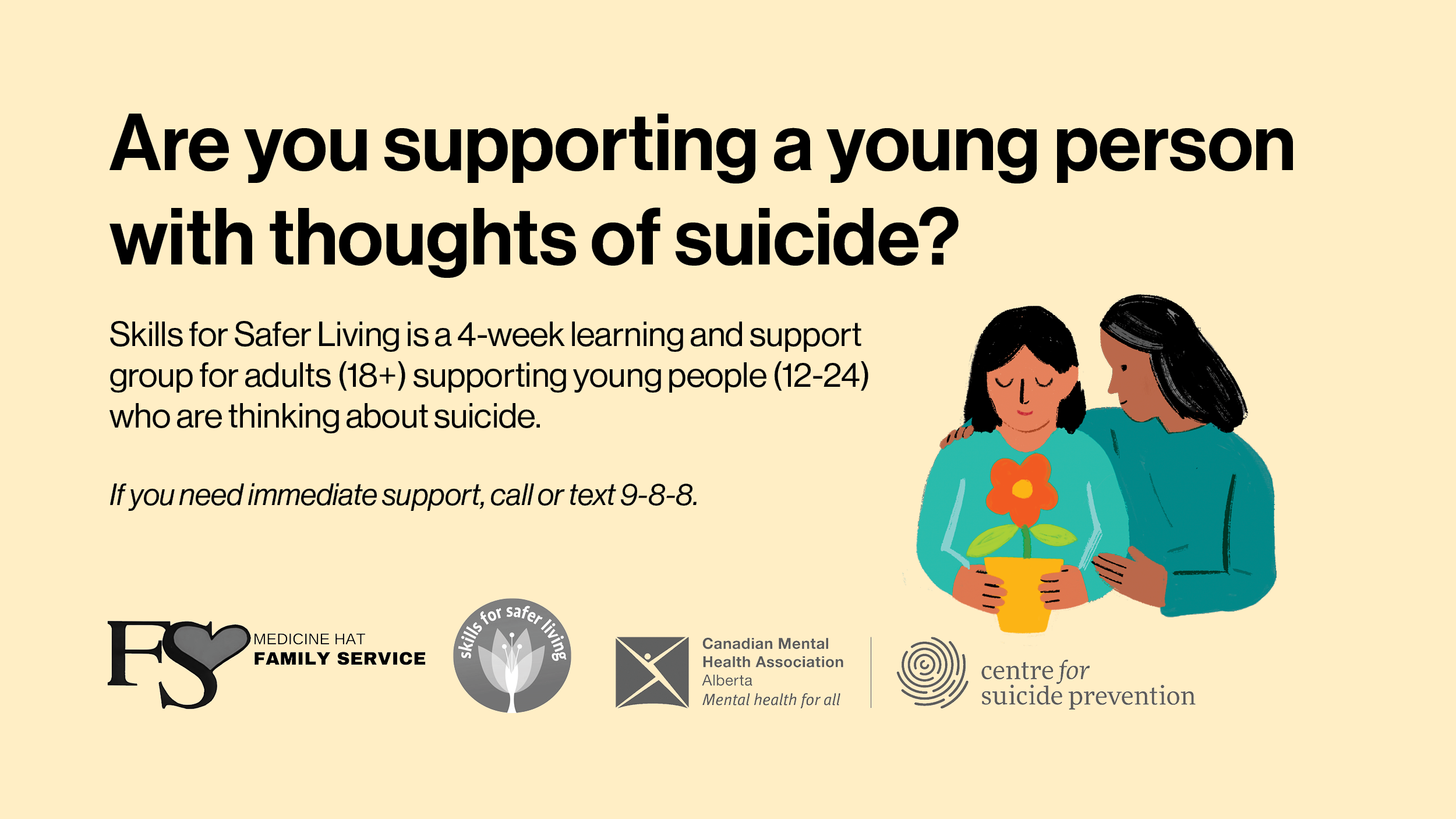
Each group is co-facilitated by Skills for Safer Living Facilitators: An Allied Health Professional Facilitator, and a Peer Facilitator.
Cost:
This program is offered at no cost and made possible thanks to funding from the Government of Alberts’s Alberta Children Services grant.
Week
Program Content
1
2
3
4
Youth/Young Person Group
Creating a climate of safety
Safety
What is safe/risky/unsafe
Grounding, distraction, and self-soothing strategies
Crisis survival strategies
Networks – Sociogram
Feelings Wheel
Early Warning Signs
Scale of Intensity
Safety Plan
Triangle: A way of conceptualizing and working through a situation where you can identify your choices and moments of control
Caregiver Group
Creating a climate of safety
Grounding, distraction and self-soothing strategies
What is safe/risky/unsafe
What is non-suicidal self-injury (myths vs facts)
What is suicide (myths and facts)
Network – Sociogram
Feelings Wheel
Understanding Emotional Literacy
How caregivers can help
Early Warning Signs
Scale of Intensity
Safety Plan
Triangle: A way of conceptualizing and working through a situation where you can identify your choices and moments of control
By the end of the program, youth/young people will have their own unique Safety Plan, have learned skills and learned about resources to help keep themselves safer.
Facilitators will tailor content and group discussions based on the group’s needs.
Resources:
Skills for Safer Living is not a 24/7 crisis service:
If you are in immediate danger, call 911
If you, or someone you know, is in crisis, help is available:
24/7 crisis support to talk to a trained responder who will listen and provide support.
Suicide Crisis Helpline: Call/text 988
Kids Help Phone: Call 1-800-668-6868 text 686868
24/7 multilingual and confidential support to young people
Hope for Wellness Line: Call 1-855-242-3310
24/7 availability to all indigenous people across Canada
Skills for Safer Living Expression of Interest (EOI) form
If you are interested in joining a Skills for Safer Living group, please complete and Expression of interest form below.